How does Socfindo do its Selection

Mass Selection
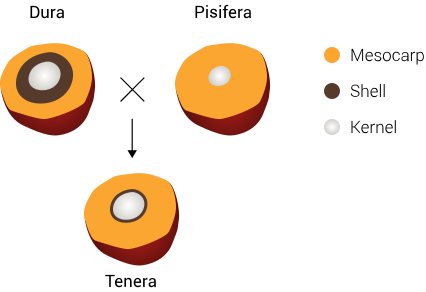
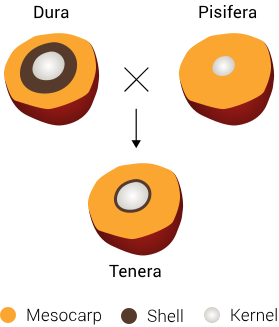
The first genetic trial garden was opened in Bangun Bandar in 1933, where the research teams practiced a selection method until the 1970 known as mass selection and family selection. In 1939, the discovery of Mendelian inheritance of fruit shell thickness by Beinart and Vanderweyn (Ineac), allowed a yield increase of more than 20%. When a Dura palm is crossed with a Pisifera palm, it gives a 100pc Tenera palm, with a thin shell and a higher amount of mesocarp.

Reciprocal Recurrent Selection
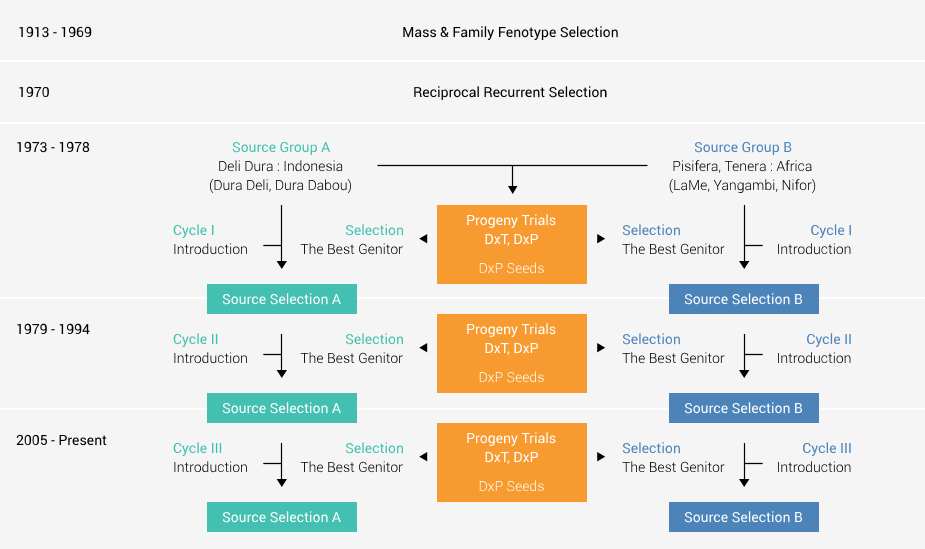
In 1970, Socfindo in cooperation with the French Institute IRHO (Institut de Recherches pour les Huiles et Oléagineux) began to develop an oilpalm breeding program using the RRS (Reciprocal Recurrent Selection) method where two main group of palms from different origins were crossed: The group A (Dura) with the palms originating in Asia and the group B (Tenera and Pisifera) with palms originating from Africa. Each cycle allows the selection of the best crosses and has seen improvements on both the oil extraction rates and the FFB yields per hectare.

Current Programme
Today, Socfindo's breeding programme has entered the third cycle in recombining the best progeny using Reciprocal Recurrent Selection.
Our breeding development has been schematised in the chart below.